A year in the life of a Conservation Ranger
21/01/26 – Jamie Stimpson, Conservation Ranger
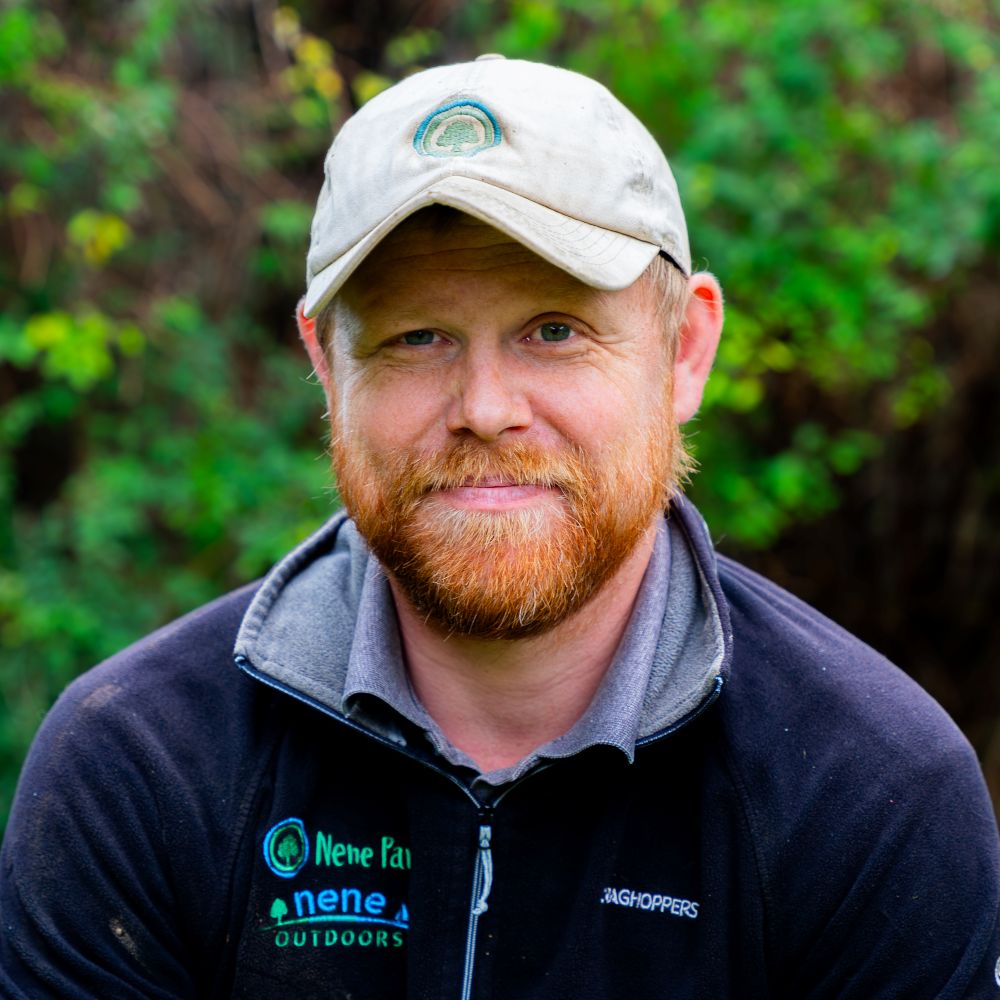
So, it’s my turn to write a blog! Having worked at Nene Park Trust for just over two years I thought I was getting away with it (but apparently not!). As I have worked outside for most of my career, I am not usually one to sit at a computer for long periods but here goes….
I’ve decided to try to sum up a year in my role. As a Conservation Ranger, my job changes on a daily basis. Alongside all the other rangers I help to maintain Nene Park Trust land for public use. This fundamentally means grass cutting, maintaining pathways, inspecting play areas, doing Duty Ranger shifts, providing first aid, repairing fences, maintaining public facilities and ensuring the park code is followed by our visitors. We also play a large part in the set up and breakdown of our events for example Winter Festival and Peterborough Celebrates Festival and these are the tasks that our visitors are most likely to bump into us doing. However, each of us has our own specialty and mine is conservation.
It is the conservation tasks that I most enjoy about my role. My career has been based around wildlife and conservation, and I get the most job satisfaction from providing wildlife with new habitats and engaging members of the public with the amazing wildlife we have in our area. So here is a run through of what we have got up to over the course of last year.
Let’s start with last January. We returned from our break over Christmas and New Year with the Winter Festival breakdown complete. The next couple of months was when most of the tasks involving heavy machinery and tree work were carried out (it’s safer for everyone as there are fewer visitors and it’s outside bird nesting season). This year I completed my Large Tree Felling course (helpful for our woodland management and pushing back the encroaching trees on our wetlands) and I used it straight away clearing an area for new cattle fencing to enable more conservation grazing of our wetland meadows.
Over the next two months I was involved in surveying and replacing a sand martin bank ready for breeding season, counting how many nests were in the boxes and making a note of any chicks that unfortunately didn’t survive to fledge. We made efforts to improve the fish habitat around the lakes in Ferry Meadows, working closely with the Peterborough District Angling Association (P&DAA) as part of the fishing peg maintenance, we hinged trees into the water to provide shelter from predators for small fish. In an area known as Cockleshell bay (the southernmost point of Gunwade lake) we created willow islands alongside hinging of several trees including some very large willows. These willow islands are made from coppiced stakes which if driven into the bed of the lake before completely dying will begin to root and grow. These stakes are held together with willow binders, and the combination of new root growth and shoots create both areas under the water for fish to hide and possibly spawn but also nesting areas above the water for a variety of birds. After a year or two we will return to these to weave the new growth into the structure and allow the process to continue.
February half term brought some public events, and for me this was a Young Ranger session, where we carried out some coppicing and our Meeting Magical Mammals event where we catch some mice, voles and possibly shrews to give us an idea of which species we have in the area and also give families a chance to see these elusive small mammals up close and learn about their habitat, diet and different adaptations.
Moving into spring, the park started to come alive again. The last of our coppicing work was carried out before birds began to nest and we began our grassland management. Various meadows had an early cut to try to give our wildflower species a head start before they got out-competed by the more dominant grasses.
In April we restarted Badger Watch, which involved setting camera traps to monitor a sett and organise evenings where myself and two colleagues lead the event. Fortunately on two out of the three nights we had at least one badger make an appearance for us!
May was dominated by Peterborough Celebrates Festival and the whole staff team was focused on preparation, the event itself and the breakdown after, with general maintenance of the park happening alongside.
As we headed into the warmer months we approached our busiest period. June/July saw us prepare for the busy school summer holidays ahead. I lead one of our Wellbeing Wanders taking a group on a guided walk around Thorpe Meadows and Thorpe Wood providing a safe space for people to walk and socialise without worrying about getting lost on a route. The Conservation Rangers carried out some green hay spreading, taking seed from one of our Sites of Special Scientific Interest (SSSI) wildflower meadows to another meadow (no SSSI status) with the goal of increasing its biodiversity. We then attempted to transplant some reeds onto the new reed bed in Gunwade Lake, as the geese had eaten all the new shoots, which unfortunately did not take. We have tried again with new shoots which began growing on Ham Mere, if these are successful we will transplant more next spring.
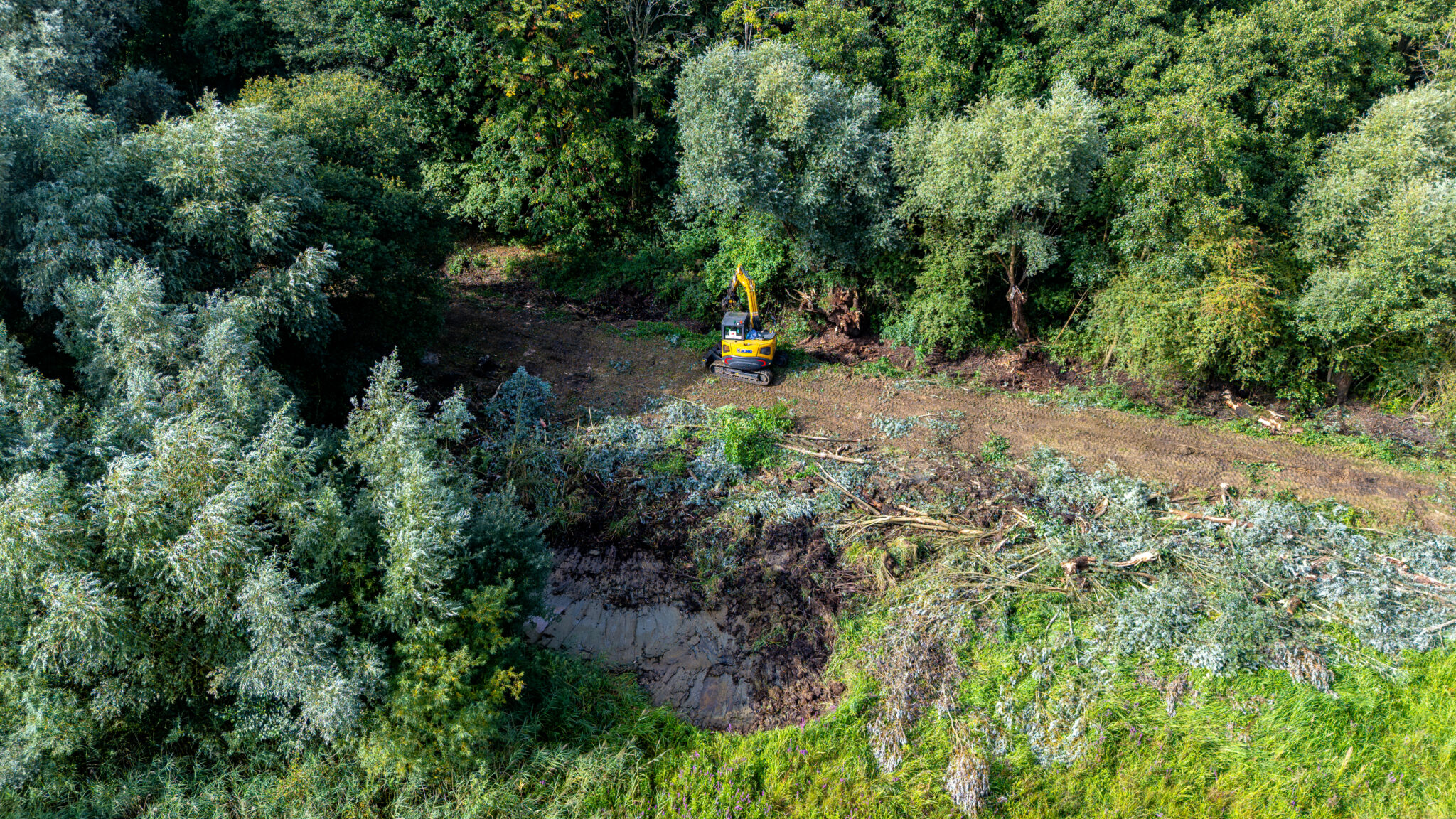
August brought about the start of the Ham Mere restoration project, which initially involved clearing a path for the machinery to access the area to create a new bund suitable for our vehicles to access the mere all year round. Once the new landscape had been established by the contractorsit became our job over the next few months, alongside our volunteer groups, to remove as much of the willow from the scrapes before the rain came and flooded the area,stopping our progress for the year (I am writing this section in the middle of November and the rain has just hit). I am looking forward to seeing what species make use of the wetland as it takes shape over the next few years.
As we entered September the Park began to quieten down after the school holidays and we began to look forward to our winter work again. Whilst boarding up some windows after some vandalism, Oli and I had to get our resident bat rescuer Sophie to come and help us safely release a bat that got stuck behind some boarding. Our Young Rangers helped us seed a grass-dominated meadow with yellow rattle, which will hopefully parasitise the grass and help wildflowers compete again in what was once a diverse wildflower meadow.
October and November have been a race against the rain. Typically this time of year sees several areas of the Park flooded, however this year the rain didn’t arrive until mid-November so we have been progressing as quickly as possible with Ham Mere succession removal. We got way past where we expected to get to, thanks to the massive support from our Conservation and Hit Squad volunteers. Sophie and I, along with help from other staff and volunteers carried out Harvest mice surveys on some of our grassland adding our data to the mammal societies ‘National Harvest Mouse Survey’. This will provide us with data which with influence how we manage these areas going forward.
In December we completed our second Bee Bank not far from the railway bridge near Lynch Farm and hope this will provide another space for the variety of solitary bees which utilise this area to make their nests. More fish habitat work is taking place with trees being hinged along the Goldie back water again providing shelter for young fish which occupy that stretch of water. This takes us full circle to December, the Winter Festival and our much-needed Christmas break.
Well, for someone that doesn’t usually write this kind of thing I feel like I could write a lot more as this is only my top highlights of the year. The rest of the Park Management Team could probably add much more as we try to continue improving the park both for wildlife and our visitors.