Sand martin success!
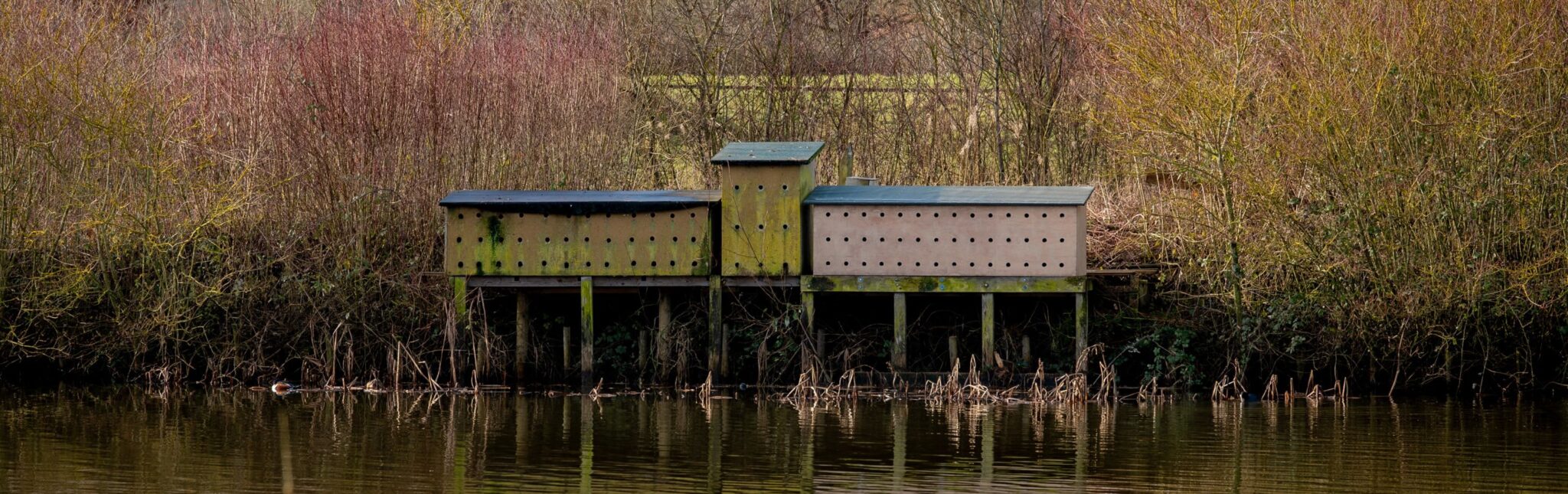
Have you ever seen the sand martin nesting box on the Lynch Lake island? If you’ve been here recently, you may have noticed that the box on the right hand side is new – replacing the old nesting box which was around ten years old. We have estimated that since the original nesting box was installed ten years ago, an amazing 2-3,000 sand martin chicks have fledged from there!
Sand martins usually nest by digging tunnels into river banks and originally these birds nested in the steep banks around the gravel pits while the lakes you see today in Ferry Meadows were created. The subsequent landscaping work of Ferry Meadows removed any vertical banks, which caused the birds to abandon the Park. So, to help redress this loss of biodiversity, ten years ago we built our first artificial sand martin nest bank on the main island in Lynch Lake, which the birds soon returned to using.
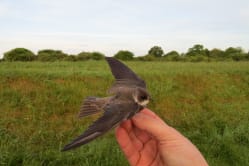 Every year, around mid-March, sand martins return from their winter home in West Africa and announce their arrival in the Park with their characteristic subtle buzzing calls. Within a few weeks of their arrival each year, these little brown birds busy themselves with breeding.
Sand martins nest in colonies where competition between birds for nest holes can be fierce. With our nest boxes the birds seem to have a preference for the top row of penthouse apartments which are usually occupied first, but only after frequent squabbles between neighbours. Once the nest hierarchy has been established, in preparation for the eggs, the adults set to work collecting grass and feathers to line the nest chamber. Typically a clutch of 5 or 6 small (10mm long) white eggs are laid. Incubation takes around 14 days and once the chicks hatch it takes another ten frantic days or so before they fledge. Every day the chicks are in the nest, the adults catch thousands of tiny gnats in flight over the lakes, a full time job for both parent to fill the ever hungry mouths of their growing brood. Once fledged, the chicks are dependent on the adults for another week or so before they depart for Africa. Many adults stay and start another the whole process again and raise a second brood.
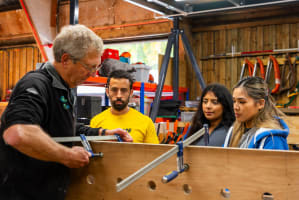
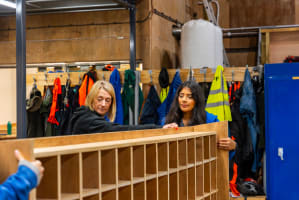
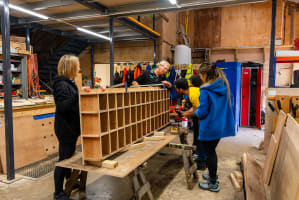
Thank you to Compare the Market who have given us funding for the new nest box – and also their time, with a team devoting a day last autumn to help us build a new box.

So, when you’re in the Park in March, keep your ears out for the buzzy calls of sand martins as they return and we hope that this coming breeding season we will see the new box fully occupied and another successful year for these delightful little birds.